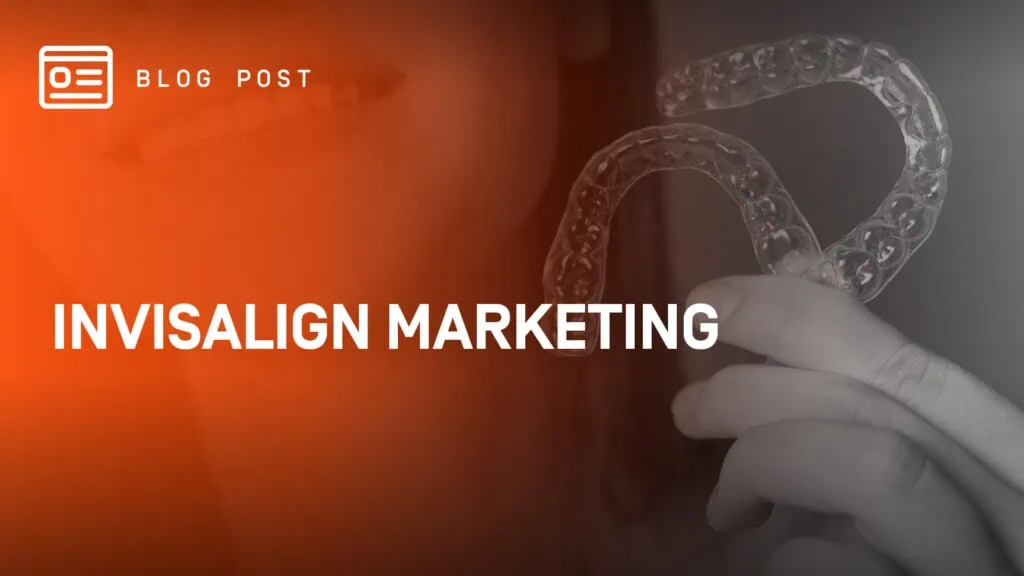
Invisalign is the most searched treatment in orthodontics. Patients who want straighter teeth are searching it by name, comparing it to traditional braces by name, and asking cost and timeline questions about it specifically. If your practice offers Invisalign and you don’t have a dedicated, well-executed marketing strategy for it, you’re leaving a significant portion of your potential patient base to competitors who do.
This guide covers everything that actually works in Invisalign marketing — the paid search strategy, the landing page fundamentals, the social media approach, and the content that builds authority. I’m writing this from over a decade of running Invisalign campaigns for orthodontic practices across the country. The tactics that work in 2026 are different from what worked five years ago, and they’re more nuanced than most Invisalign marketing content will tell you.
Why Invisalign Needs Its Own Marketing Strategy
The mistake most practices make is treating Invisalign as just another service on their list. They add it to their services page, maybe run some generic ‘we offer Invisalign’ ads, and wonder why their conversion rate on clear aligner inquiries is lower than they’d expect. Invisalign has a specific patient psychology, a distinct competitive landscape, and a purchase decision process that’s different enough from traditional braces that it requires its own approach.
The Invisalign patient is often not the same as your typical bracket-and-wire patient. Adults considering Invisalign are usually self-conscious about the cosmetic implications of treatment, sensitive to price because insurance coverage is inconsistent, motivated by outcome speed, and deeply influenced by social proof. Teens choosing Invisalign over braces are often driven by social factors and parental preference for compliance monitoring features. Marketing that doesn’t speak to these specific motivations — and instead just says ‘we do Invisalign’ — produces poor results because it doesn’t meet the patient where they actually are.
Understanding Your Invisalign Patient Segments
The Adult Patient: 25 to 55
Adults represent the fastest-growing segment of orthodontic patients, and Invisalign is the primary vehicle for that growth. An adult considering Invisalign is usually someone who had braces as a kid, noticed their teeth shifting in their twenties or thirties, and is now motivated to correct it — but absolutely does not want to go back to metal brackets. They value discretion above almost everything else. They want to know: will people be able to tell I’m in treatment? How does it affect my speech at work? Can I drink coffee? How often do I actually have to wear them?
The marketing that resonates with this patient segment is realistic, specific, and social-proof-driven. Before-and-after photos from real patients who look like them. Testimonials that address the concerns they have. Content that answers the questions they’re too embarrassed to ask in a consultation. And pricing information that at least gives them a range — because the adult Invisalign patient is doing their research, and if your website doesn’t address cost at all, they’ll assume the worst and look elsewhere.
The Teen Patient and Their Parents
Teen Invisalign marketing is actually parent marketing. The teenager may prefer Invisalign for aesthetic reasons, but the parents are the ones making the financial decision and the compliance judgment. Marketing to this segment requires messaging that addresses the parent’s concern about compliance — which Invisalign addressed with their compliance indicators built into the aligners — and the teenager’s concerns about how treatment will affect their social and athletic life. Sports, music, school photos, eating with friends — these are the friction points, and the marketing that addresses them directly converts better than the marketing that just shows a straight smile and says ‘ask about Invisalign.’
Building a Google Search Strategy Around Invisalign
The Keywords That Convert
Invisalign search terms fall into a few distinct categories, and understanding which category a searcher is in changes how you should advertise to them. ‘Invisalign near me’ and ‘Invisalign [city]’ are local intent searches — the patient has already decided they want Invisalign and is now looking for a provider. These are your highest-converting keywords, and they’re also the most competitive and expensive. ‘Invisalign cost’ and ‘how much does Invisalign cost’ are cost-research searches — the patient is deciding whether they can afford it. These convert at a lower rate but can be captured with strong landing page content that addresses cost transparently. ‘Braces vs Invisalign’ and ‘Invisalign vs braces for adults’ are comparison searches — the patient is still in the decision phase about which treatment type they want. These are best served with content that explains the differences honestly rather than promotional ads.
Google Ads for Invisalign: What’s Working in 2026
In competitive markets, Invisalign cost-per-click on Google can run from $8 to $20 per click or higher. That makes conversion rate the most important variable — a campaign paying $15 per click needs to convert at a meaningful rate to be profitable when you factor in the cost per booked consultation. The single biggest lever on Invisalign Google Ad performance is the landing page, not the ad itself. We’ve seen accounts where the same ad copy sending traffic to a dedicated Invisalign landing page versus a general practice homepage produced conversion rate differences of 300 to 400 percent. The general homepage always loses.
Effective Invisalign ad campaigns in 2026 use specific ad copy that speaks to the patient segment you’re targeting — adults who want to avoid braces, teens who want a confident smile, patients in treatment who want to know the timeline. They use call extensions and form extensions to capture leads directly from the search results page. They run tightly themed ad groups so each ad is showing to the most relevant search intent. And they send traffic to a dedicated landing page built specifically for Invisalign — not a practice homepage, not a services overview, a page that starts and ends with Invisalign.
Your Invisalign Landing Page: What Converts and What Doesn’t
Most orthodontic practice Invisalign pages underperform because they’re built as information pages rather than conversion pages. They explain what Invisalign is — information the patient already has — without creating momentum toward the action you want them to take. A high-converting Invisalign landing page has a structure that mirrors the patient’s decision journey.
The top of the page needs to answer the implicit question the patient arrived with: is this the right practice for my Invisalign treatment? That means real photos of real patients — not stock photography of models wearing invisible aligners — and a headline that speaks to the outcome the patient wants, not the service you offer. ‘Get the smile you’ve been thinking about, without anyone knowing you’re in treatment’ converts better than ‘Our practice offers Invisalign clear aligners.’
The middle of the page needs to handle the objections that stop patients from booking. Cost: give a range or a financing option rather than saying ‘contact us for pricing.’ Timeline: be honest about how long different complexity levels take. Compliance: address the concern about wearing aligners enough to get results. The bottom of the page needs a single, clear call to action. Not four different things to do — one action, easy to take, ideally bookable online.
Meta Ads for Invisalign: Reaching Patients Before They’re Searching
Google Ads captures demand. Meta Ads — Facebook and Instagram — create demand. The Invisalign patient who found you on Google had already decided to look for an orthodontist. The Invisalign patient who sees your Instagram ad was scrolling through their feed when they saw a before-and-after photo from one of your patients and suddenly remembered that they’ve been thinking about their teeth. Both channels matter, and the practices that run both intelligently grow faster than the ones that rely on only one.
The creative that works best on Meta for Invisalign is authentic and specific. Real before-and-after transformations with real patient stories — not long captions about the technology, but human stories about how the patient felt before and after. Short video testimonials where a patient talks directly to the camera and says what Invisalign meant to them. Before-and-after carousels with a clear description of the treatment timeline and outcome. These outperform polished, produced content by significant margins because they feel trustworthy rather than promotional.
Retargeting is where Meta becomes especially powerful for Invisalign. A patient who visited your Invisalign landing page but didn’t book is one of the highest-value audiences in your entire marketing ecosystem. They’ve already shown intent. A retargeting ad showing them a patient testimonial, a limited-time consultation offer, or a simple reminder to schedule can convert a significant percentage of the website visitors who left without taking action. This is systematic revenue recovery, and most practices don’t do it.
Content Marketing That Builds Invisalign Authority
Beyond your Invisalign service page, a cluster of supporting content significantly improves your visibility for the long-tail questions Invisalign patients ask. Dedicated pages or thorough blog posts covering ‘how long does Invisalign take,’ ‘Invisalign cost with insurance,’ ‘Invisalign vs braces for adults,’ ‘how to clean Invisalign aligners,’ and ‘Invisalign for teens vs traditional braces’ capture a substantial volume of organic search traffic at a very low ongoing cost. Each of these pages also provides content that can be cited in Google’s AI Overviews — which increasingly means appearing in the answer before the patient ever reaches a list of websites to choose from.
The Role of Pricing Transparency
This is the conversation most orthodontic practices avoid and it consistently hurts their Invisalign conversion rate. Patients researching Invisalign online will almost always look for cost information. If your website doesn’t provide it — even a range, even a ‘starting at’ figure — they will find it elsewhere. The competitor who says ‘Invisalign treatment in our practice starts at $3,500 and typically ranges from $4,000 to $7,500 depending on complexity’ will capture the patients who left your website wondering what it would cost them. You don’t need to commit to a number that creates expectation problems in the consultation. But giving patients enough information to know whether Invisalign is in their financial range is a conversion fundamental that too many practices ignore.
Measuring What’s Actually Working
The metrics that matter in Invisalign marketing are not impressions, clicks, or even website visits. They are consultation requests, consultation show rate, and Invisalign case starts. Everything else is intermediate data. We build Invisalign campaign measurement around these outcomes using call tracking, form tracking, and — through PracticeBeacon — post-contact conversion data that tells us what happened after the lead came in, not just how many leads there were. A campaign generating 50 Invisalign consultation requests per month with a 40 percent show rate and a 60 percent start rate is a significantly different business outcome than a campaign generating 80 requests with a 25 percent show rate and a 40 percent start rate. The math is completely different, and so is the strategic response.
If you’re serious about building a scalable Invisalign patient acquisition system — one that runs predictably, compounds over time, and translates marketing investment directly into started cases and production — we’d like to talk. We’ve built this for practices across every market type in the country, and the framework is proven. Start with a discovery call and let’s look at your Invisalign opportunity specifically.
How HIP Builds Invisalign Marketing Systems for Orthodontic Practices
We don’t run Invisalign campaigns as isolated ad projects. We build them as complete patient acquisition systems: the search strategy to capture high-intent local traffic, the landing page architecture to convert that traffic, the Meta campaigns to create demand among patients who aren’t actively searching yet, the retargeting sequences to recover visitors who didn’t book, the content cluster to build organic authority, and PracticeBeacon to manage every lead that comes in and make sure it gets followed up with the right message at the right time.
The result is an Invisalign marketing system that doesn’t just generate leads — it generates started cases. We track the full funnel from first click to first aligner placement, and we use that data to continually optimize every component. Practices we work with on Invisalign specifically tell us the same things: the leads are better quality, the consultation show rate is higher, and the conversion to treatment is more consistent. That’s not because the ads are magic — it’s because every step of the patient journey has been intentionally designed.
If your Invisalign marketing is currently a service listing on your website and an occasional social media post, you’re not competing at the level your Invisalign expertise deserves. Your results are limited by your system, not by your clinical ability. Let us build the system. That’s what we do.
The practices that consistently fill their Invisalign schedules share one trait: they never stop marketing to the patient who is ‘just thinking about it.’ The consideration window for Invisalign can span six to twelve months. A patient who downloads your free guide today might not call for a consultation until spring. Staying present across search, social, and email throughout that window is what separates practices with strong Invisalign case starts from those who rely entirely on word-of-mouth referrals.