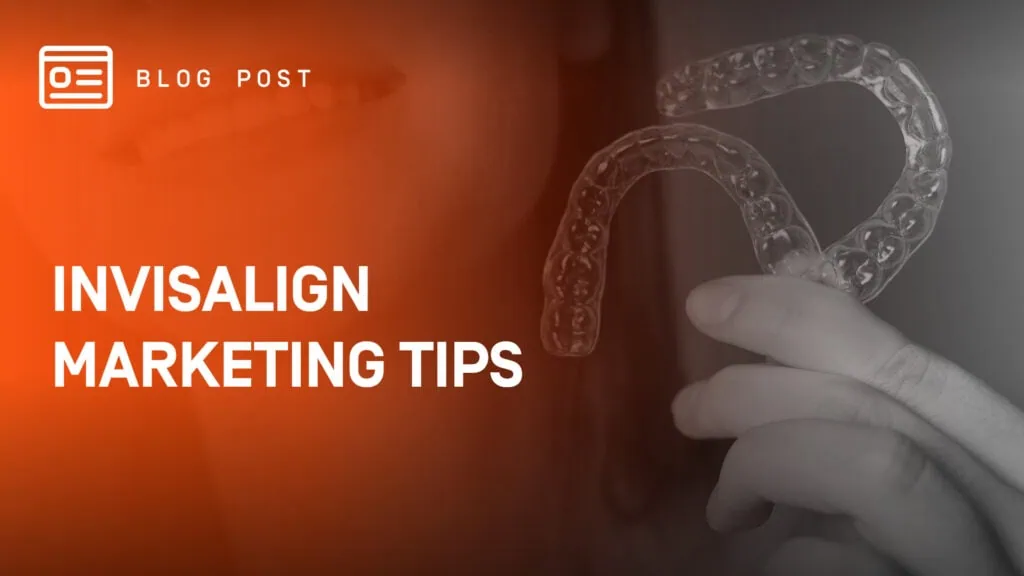
Adults now represent somewhere between 25 and 30 percent of all orthodontic patients in the United States, and that number has been climbing for over a decade. Invisalign is the primary reason. The technology makes adult orthodontic treatment genuinely viable — socially, professionally, practically — in a way that traditional braces never quite did. And yet most orthodontic practices market their Invisalign offering in ways that don’t actually speak to the adult patient’s specific psychology, objections, or decision-making process.
This piece is for practices that want to grow their adult Invisalign patient volume with strategies that are actually calibrated for the way adult patients make this decision. Not generic digital marketing advice with ‘orthodontic’ inserted — specific strategies based on what we’ve seen work across hundreds of orthodontic practices we’ve marketed for over the past decade.
How Adult Invisalign Patients Think (And Why It Matters)
The adult considering Invisalign has a completely different internal conversation than a parent scheduling their teenager. Adults already know they want treatment — they’ve been thinking about it, often for years. The barriers are not awareness or education. The barriers are almost always some combination of cost and payment structure, concern about what treatment will look like at work or in social situations, doubt about whether they’ll actually comply with wearing aligners consistently, and a general hesitation to invest time and money in something that could disappoint them.
Marketing that doesn’t address these specific barriers — that just shows smiling people in clear aligners and says ‘start your journey today’ — doesn’t convert adult patients at a meaningful rate. Marketing that directly and honestly addresses each of these concerns, provides real evidence of outcome, and makes the first step feel low-risk converts significantly better. The difference between these two approaches is the difference between an adult Invisalign campaign that feels like it’s doing something and one that visibly produces new starts every month.
The Channel Strategy for Adult Invisalign Patients
Google Search: High Intent, High Cost, High Value
Adults searching ‘Invisalign near me’ or ‘Invisalign for adults’ on Google are at the bottom of the decision funnel. They’ve already done their research, they’ve decided they want clear aligners, and they’re now evaluating which practice to choose. Google Ads targeting these terms is expensive — in competitive markets, clicks can run $10 to $20 or more — but the conversion value is high because you’re reaching patients who have already made the primary decision. The key variables are landing page quality and response speed. An adult who submits a consultation request and doesn’t hear back within an hour is three times less likely to book than one who gets an immediate response.
Meta Ads: Activating the Passive Considerer
The much larger pool of potential adult Invisalign patients — the people who have thought about their smile but haven’t started actively searching — lives on Facebook and Instagram. This is where Meta Ads do their best work for adult Invisalign marketing. A well-placed before-and-after testimonial from a patient who looks like your target demographic, paired with messaging that speaks directly to the ‘I’ve been thinking about this for years’ mindset, can activate patients who wouldn’t have otherwise entered your funnel for months.
The targeting for adult Invisalign Meta campaigns should be age-appropriate — typically 25 to 55 — and layered with interest signals around personal appearance, cosmetic dentistry, and professional development. Lookalike audiences built from your existing adult Invisalign patients often outperform interest-based audiences once you have enough patient data to build them from.
Retargeting: Your Highest-ROI Channel
Adult Invisalign patients research extensively before booking. They’ll visit your website, visit a competitor’s website, read reviews, check costs, and come back days or weeks later. A retargeting campaign that keeps your practice in front of patients who have already visited your Invisalign page — showing them a testimonial they haven’t seen, addressing a specific objection, or simply reminding them to take the next step — recovers a meaningful percentage of patients who would otherwise book somewhere else or not at all. In well-managed accounts, retargeting often produces the lowest cost per consultation request of any paid channel.
The Messaging That Resonates With Adult Patients
Three messages consistently outperform everything else in adult Invisalign marketing. The first is social invisibility: the fact that most people will not notice you’re in treatment. Adults who are concerned about professional image — which is most of them — respond to specific, credible assurances about this. Not ‘virtually invisible’ marketing speak, but real photos of real patients at work or in social settings, wearing aligners, and looking completely normal.
The second is timeline realism. Adults want to know how long it will actually take, not a best-case scenario. Practices that say ‘treatment typically takes 12 to 18 months, though some patients see results in as few as 6 months’ convert better than practices that lead with ‘6-month smile’ promises that feel too good to be true. Adults are skeptical. Honest, specific information builds the trust that moves them forward.
The third is financing accessibility. Many adult Invisalign patients could afford the treatment — it just doesn’t fit the way they think about large expenditures. Monthly payment messaging that frames Invisalign in terms of a coffee-a-day cost, or that leads with ‘$199/month’ rather than a total treatment price, significantly lowers the psychological barrier to action. The patient who thinks ‘I could never afford Invisalign’ and the patient who thinks ‘I could probably find $200 in my budget’ are the same person — just shown different information.
Conversion-Focused Landing Page Design for Adult Invisalign Patients
Adult patients are research-driven. They will leave your website if they don’t find specific answers to their questions quickly. Your adult Invisalign landing page needs to answer, explicitly and clearly: how much does it cost (or at least a range), how long will treatment take, will it affect my daily life significantly, how does the process work, and what do real patients like me say about their experience with this practice. Each of these should be addressed in the first scroll of the page — not buried in fine print at the bottom.
Social proof is disproportionately important for adult patients. Before-and-after photos from patients in their 30s and 40s, testimonials that specifically address professional or social concerns, and review excerpts from adults describing their experience all create the ‘people like me have done this and it worked’ signal that adult patients need before committing. Practices that invest in gathering and displaying this kind of age-appropriate social proof see meaningfully higher conversion rates on adult Invisalign pages.
Measuring Adult Invisalign Campaign Performance
The metric that matters for adult Invisalign marketing is started cases, not leads. A campaign generating 60 adult Invisalign leads per month with a 20 percent consultation show rate and a 50 percent case acceptance rate produces 6 started cases. A campaign generating 35 leads with a 60 percent show rate and a 70 percent acceptance rate produces nearly 15 started cases at potentially lower cost. The difference is downstream from the lead, and improving it requires understanding where patients are falling out of the funnel after they express interest.
This is exactly what PracticeBeacon was built to help with. When every lead from an adult Invisalign campaign flows into a system that tracks the full journey — contact, consultation, acceptance, start — we can identify where the attrition is happening and address it specifically. Most practices lose more adult Invisalign patients in the follow-up phase than they realize. The fix isn’t always more leads — sometimes it’s a faster response, a better consultation experience, or a more compelling fee presentation.
The Role of Reviews and Social Proof in Adult Invisalign Decisions
Adults don’t make orthodontic decisions the way teenagers do. A teen often defers to their parent’s recommendation and their friend’s experience. An adult doing their own research is weighing five or six factors simultaneously — cost, discretion, convenience, provider reputation, and the likelihood of getting the results they’re imagining. In that decision process, social proof is disproportionately influential.
Google reviews that mention Invisalign specifically — not just general praise for your office — carry significant weight with adult patients. When someone reads ‘I finished Invisalign in 14 months and nobody even noticed I was wearing them, my teeth are perfect,’ that’s addressing the exact concern that’s been holding them back. We help practices build review generation systems that capture this kind of specific, useful feedback — not just star ratings.
Before-and-after photos of adult Invisalign cases also convert at higher rates when the subject looks like your target patient. Photos of adults in their 30s, 40s, and even 50s who completed treatment make the outcome feel attainable. Photo consent and patient testimonial systems are a simple but often overlooked lever that HIP helps practices build into their workflow.
Seasonality and Offer Strategy for Adult Invisalign Campaigns
Adults have predictable financial decision windows that don’t follow the same back-to-school cycle that drives teen orthodontic demand. New Year’s resolution season — January through early February — is consistently strong for adult Invisalign campaigns because the desire to change and the willingness to invest align simultaneously. End-of-year campaigns targeting patients with remaining FSA or HSA balances also drive urgency in a way that resonates with this demographic.
Wedding season is another highly effective window, particularly for women in their late 20s and early 30s who are motivated by an upcoming event. We’ve run pre-wedding campaigns for practices that generated Invisalign cases a full year out from a client’s wedding date — with multiple referrals from the wedding party following. These campaigns require specific creative and messaging, but the conversion economics are excellent because the patient’s motivation is exceptionally high.
Promotional offers for adults need to be framed around access and convenience rather than price alone. Complimentary consultations, flexible payment plans, and clear communication about treatment timelines tend to outperform percentage-discount offers. Adults are often less price-sensitive than practices assume — they want confidence in the outcome and a clear path to get there.
Connecting Your Invisalign Marketing to a Full Patient Journey
One of the most common Invisalign marketing mistakes we see is running campaigns that generate interest but fail to convert because the patient journey breaks down somewhere after the ad click. The ad is compelling, the landing page is decent, but the follow-up is slow, the consultation booking process has friction, or the consultation itself doesn’t close effectively.
HIP addresses this by treating adult Invisalign marketing as a complete system. The campaign drives the lead. PracticeBeacon captures, routes, and tracks the lead. The consultation process is refined to help your team present treatment in a way that connects to adult-specific motivations. Post-consultation follow-up is automated but personalized. The result is a conversion rate that reflects the quality of the leads you’re generating — not just the volume.
When all of those components are aligned, the cost per Invisalign start decreases significantly. Practices that implement this kind of full-funnel approach consistently see their adult Invisalign case volume grow quarter over quarter — not because they’re spending more, but because fewer leads fall through the cracks.
Turning Adult Consultations Into Accepted Cases
Getting an adult through the door for an Invisalign consultation is only half the battle. Adult patients typically do more research, ask more questions, and have more objections than teen patients. They want to know about financing, treatment timeline, what happens if they travel for work, and whether their friends will be able to tell they’re in treatment. Your consultation process needs to address all of these without feeling like a sales pitch.
The practices we work with at HIP Creative that have the highest adult Invisalign case acceptance share a few common practices: they send a pre-consultation email sequence that answers the top five questions before the patient even walks in; their consultation rooms have before-and-after photo books featuring adult patients specifically; and their treatment coordinators are trained to discuss financing proactively rather than waiting for the patient to ask. These aren’t complicated changes, but they shift the consultation from a product presentation to a genuine conversation about the patient’s goals.
Post-consultation follow-up is equally critical. Adult patients rarely accept treatment on the spot — they go home, discuss it with a spouse, think about the timing, and then either call back or don’t. Practices without a structured follow-up sequence lose most of those on-the-fence patients to inertia. PracticeBeacon automates this follow-up through a combination of email and text touchpoints that feel personal without requiring staff time, recovering a significant percentage of consultations that would otherwise go cold.
Adult Invisalign marketing is one of the highest-ROI investments an orthodontic practice can make. Adults self-refer, they rarely need parental financial approval, and they have significantly higher disposable income than teen patients. The practices that deliberately build their marketing pipeline around adult aligner cases — with targeted creative, specific landing pages, and a follow-up system built for how adults make decisions — consistently outperform their competitors in both case volume and revenue per case.