Subscribe: RSS
Episode title: The Brand Strategy Mistake Costing Your Dental Practice Patients!
Show: The GrowDental Podcast
Host: Luke Infinger, Founder, HIP Creative
Presented at: [The Garg Blueprint], hosted by Dr. [Garg]
Date published: [2026-06-30] Last updated: [2026-06-30]
Summary: Private dental practices consistently lose new patients to DSOs and corporate groups not because of inferior clinical care, but because their online brand does not match the quality of care they actually deliver. Luke Infinger of HIP Creative calls this gap the Congruence Effect. When a practice’s clinical reality and its brand perception are out of alignment, the consequences show up in three measurable places: patients hesitate when they first discover the practice online, they arrive at the consultation with doubt rather than confidence, and case acceptance drops. The fix follows a specific sequence. Build the brand foundation first, establish findability through Google Business Profile, reviews, and SEO second, then add paid ads on top of that in the third step. Practices that skip to paid ads before those foundations exist are wasting 30 to 40% of their ad spend and paying roughly six times more per lead than a practice that earns organic search traffic.
Topics covered: Brand perception versus clinical reality, the Congruence Effect, DSO and corporate dental competition, Google Business Profile optimization, review strategy, local SEO and the map pack, the 72-hour appointment booking rule, organic versus paid lead cost, the brand-findability-amplification sequence, offer strategy, community engagement.
Key entities named: HIP Creative, Practice Beacon, Google Business Profile, ClearChoice, Dr. Garg, Ben Fishbein, Dr. James Andrews, Harrison Bagdon, ChatGPT, Perplexity, Google AI Overviews, Healthgrades, JCPenney (pricing case study).
AUTHOR BLOCK
By Luke Infinger CEO & Co-Founder, HIP Creative | Author |
Luke Infinger has spent more than 12 years helping dental and orthodontic practices grow through marketing, software, and education. He is the founder of HIP Creative, which works with more than 500 dental and specialty practices across the country, and the creator of Practice Beacon, a lead-tracking CRM built specifically for dental and orthodontic teams. His work has included taking practices from regional obscurity to nationally recognized growth benchmarks, among them helping an orthodontist become the fastest-growing in the country by 2018. He is also the author of multiple books on practice growth and a sought-after speaker for dental continuing education events.
LinkedIn: https://www.linkedin.com/in/luke-infinger-b36a001b/
The Congruence Effect: Why Your Dental Practice Brand Strategy Determines Whether Marketing Works
Most dental practices spend their marketing budget in the wrong order. They invest in paid ads before they have built a solid dental practice brand strategy, then wonder why the ads underperform. Leads come through, land on an outdated website with generic copy and old photos, and a good portion walk away. The failure point is order and sequence, not ad quality.
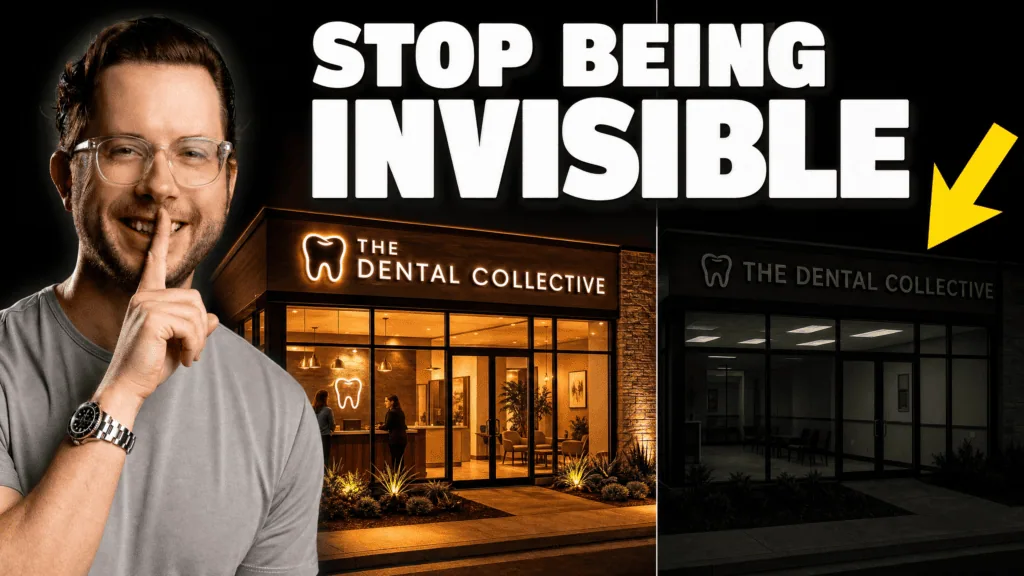
Luke Infinger of HIP Creative calls the underlying problem the Congruence Effect. It is the gap between a practice’s clinical reality, the care, the outcomes, the experience actually delivered, and its brand perception, what a potential patient discovers during their research online. When those two things line up, patients arrive to consultations ready to say yes. When they do not, practices pay for the gap with wasted ad spend, hesitant new patients, and consultation time spent answering trust-building questions that a stronger brand presence should have already resolved.
Most dental marketing conversations begin and end at paid ads. What Infinger’s presentation argues, backed by patient behavior data, is that paid ads are the final step in a three-part sequence: brand first, findability second, then amplification through paid ads. Practices that skip the first two steps and jump to step three are running an out-of-sequence strategy. The marketing does not fail because the ads are bad. It fails because there is nothing solid underneath them.
This post covers the full Congruence Effect framework, the patient behavior data behind it, and the specific areas practices can audit and improve right now.
Key Takeaways
- A 2024 survey found that 89.7% of patients begin their search for a new dental provider online, and 72% start specifically on Google. Practices that are invisible in those searches cannot rely on referrals alone to fill a schedule.
- The Congruence Effect is the alignment between clinical reality (what a practice actually delivers) and brand perception (what potential patients discover during their online research). When these two things match, patients arrive pre-sold. When they do not, conversion rates, case acceptance, and marketing ROI all take the hit.
- Brand incongruence creates three specific, measurable problems: hesitation at the point of discovery, doubt during the consultation, and lower case acceptance.
- Organic search leads cost dental practices roughly $30 each. Paid leads from Google or Meta Ads run around $180 each. That is a 6x cost difference, and organic leads convert better because those patients have already spent days doing research before they contact the practice.
- 30 to 40% of paid ad budget is wasted when the brand and website foundation has not been built first. 77% of paid dental ads send traffic to a homepage rather than a dedicated landing page built for that specific campaign.
- Businesses with 100 or more photos on their Google Business Profile receive more than 500% more phone calls than those with fewer images. Most practices have 20 to 50.
- Practices that appear in the local Google three-pack get 93% more phone calls and more than 100% more website traffic than those that do not appear there.
What Is the Congruence Effect and Why Does It Determine Case Acceptance?
The Congruence Effect is the alignment between two things: clinical reality and brand perception. Clinical reality is what a practice actually delivers. The care, the outcomes, the relationship, the patient experience from first call through end of treatment. For most private practice owners, that part is already strong. Years of training, continuing education, and daily clinical work have made them genuinely excellent providers.
Brand perception is different. It is what a potential patient thinks before they ever walk through the door. It is built entirely from what they find when they search the practice’s name, specialty, or service area. Reviews. Website. Photography. How fast someone picked up the phone. Whether that phone conversation sounded like it matched the level of expertise on the website. Social media. Response time on a contact form. Whether the messaging they see on the website matches what they see in an ad.
When clinical reality and brand perception are congruent, patients come in already convinced. Infinger describes this as the pre-sold patient: someone who shows up to the consultation having already decided they want to work with this provider. They are not shopping. They are not bringing objections about cost or comparing the practice to a competitor down the street. Case acceptance in that environment becomes a conversation, not a sales process.
When they are out of alignment, the opposite happens. A patient might find a practice through a referral or a Google search, feel uncertain based on what they discover online, and keep looking. Or they show up to the consultation skeptical, and the provider has to rebuild trust from zero instead of advancing a conversation the brand should have already started for them.
Why DSOs Are Winning the Perception Battle Without Winning on Clinical Quality
A 2024 survey found that 89.7% of patients begin searching for a new dental provider online. When those patients search corporate dental groups and DSOs (Dental Service Organizations), they find clean and current websites with professional photography, hundreds of recent reviews, and messaging that stays consistent across every platform they visit.
Corporate groups maintain that consistency because they have the infrastructure for it: chief marketing officers, brand kits, and dedicated processes for keeping the messaging aligned across locations even after rebranding or expansion. In a citation analysis HIP Creative conducted for one dental client, the practice had rebranded three times. Healthgrades listings were still showing old practice names and phone numbers from previous identities. DSOs do not have that problem because they build processes to prevent it.
A patient choosing between a DSO and a private practice in a local market cannot evaluate clinical quality during their research phase. They make a comfort decision based on what looked more credible and consistent when they were doing their two weeks of research. A patient who picks ClearChoice over a highly skilled private prosthodontist is not making a clinical decision. They are making a perception decision.
The practical opportunity for private practices is that DSOs do not have a structural advantage in brand-building. They have a process advantage. A private practice can build the same quality of online presence. It requires investment and a clear sequence of steps, but it is achievable. And once it is in place, a private practice can offer something corporate groups cannot: flexibility, genuine relationship, clinical care not constrained by corporate spending limits or standardized protocols. When a patient searching locally finds a private practice with a polished, current brand that matches the quality of their clinical work, that combination is more compelling than a corporate brand. The private practice has the trust of a real provider and the professionalism of an established presence.
What Happens When Your Brand and Clinical Reality Are Out of Alignment?
Infinger breaks the consequences of brand incongruence into three specific outcomes that directly affect practice revenue.
Hesitation at discovery. When a prospective patient finds a practice online and the messaging is generic, the photos are dated, or the website does not signal the level of specialization the provider actually has, that patient keeps shopping. Most searchers click on the first two or three results in the Google map pack. A practice that does appear there but fails to differentiate on the page still loses patients to competitors who look more credible at first glance.
Doubt in the consultation. A patient who arrived uncertain because the online brand did not fully convince them will carry that uncertainty into the appointment. The provider then spends chair time handling trust-building questions and objections that a stronger pre-arrival experience should have resolved. This is wasted clinical time, and it puts case acceptance at risk because the patient has not had the chance to become pre-sold.
Lost case acceptance. The cumulative result of the first two problems is a lower yes rate at the consultation. Every objection that has to be handled in the room represents a gap between what the practice communicates online and what the patient believed before arriving. Excellent clinical work without aligned brand perception means working harder to convert cases that should have been straightforward. Infinger put it bluntly: practices spending on marketing without fixing the foundational elements are building on a bad foundation. Everything above it is at risk.
How Do Patients Actually Research and Evaluate a Dental Provider?
The data Infinger shared on patient research behavior puts the stakes of brand and findability in concrete terms.
The average patient spends about two weeks researching a dental provider before booking. During that time, they interact with a practice’s brand across five to seven touchpoints: Google search results, the practice website, social media profiles, reviews on Google and on platforms like Healthgrades, and direct contact channels like a phone call, text, or form submission. Every one of those touchpoints is an opportunity to build confidence, and every one of them is a vulnerability if the experience or the messaging is inconsistent.
76% of patients judge a provider’s credibility based on website quality. Not credentials. Not years of experience. The visual quality and professionalism of the website is the primary credibility signal for most patients in the research phase. This does not mean credentials do not matter. It means they matter far less than most providers expect, and the website matters far more.
87% of patients read online reviews before choosing a healthcare provider. Reviews matter, but so does the response strategy. Google’s algorithm rewards practices that respond to every review, which means unanswered reviews are both a brand miss and a search ranking miss. One additional data point worth noting: businesses with a 4.9-star rating tend to get more engagement than those at a perfect 5.0, because an all-five rating reads as artificial to patients doing careful research.
44% of patients who find a dental practice through a mobile search move forward and book an appointment. That conversion rate makes mobile search one of the most direct drivers of new patient volume, which in turn makes mobile-first website design a revenue issue rather than a technical one.
Why Google Business Profile Is the Most Underused Asset in Dental Marketing
72% of dental patients who search online start specifically on Google. More than 70% of clicks in local searches go to the top three results in the map pack. Practices that fall outside that top three are, for most searches, effectively invisible to new patient traffic.
Google Business Profile (GBP) is the primary signal that determines local map pack rankings. Despite that, most practices treat it as a static directory listing rather than an active marketing channel. The numbers on GBP investment make the stakes plain. Businesses with 100 or more images on their Google Business Profile receive more than 500% more phone calls than those with fewer images. Most practices Infinger’s team audits have 20 to 50 images. The gap between that and 100 images is closeable with a smartphone: team photos, patient consent photos, community events, office and treatment area images. Those images are worth uploading because they layer in the human element that patients are looking for during two weeks of research.
Beyond images, a complete GBP includes accurate NAP data (name, address, phone number) that matches consistently across all citation sources, updated business hours and service listings, and an active review response strategy. NAP inconsistency, which is common when practices have rebranded or moved locations, suppresses local rankings in ways that no paid ad budget can fix.
What Is the 72-Hour Rule and Why Does Scheduling Speed Affect No-Show Rates?
Infinger introduced a framework called the 72-hour rule: every digital lead requesting an appointment should be booked within 72 hours of first contact. If a patient calls or submits a form on Monday, they should have an appointment scheduled by Thursday.
The reasoning follows directly from patient research behavior. A patient searching locally for a dental provider is comparing two or three options, not one. 78% of local mobile searches result in an offline visit within 24 hours, which signals how ready-to-act these searchers are. If a practice can offer an appointment in three days and the second result in the map pack cannot book them for four weeks, that patient is going to the faster option. They are not calling the first practice back to explain. They simply book elsewhere.
The connection between the 72-hour rule and no-show rates is direct. Patients booked too far out are more likely to disengage before the appointment. Their urgency was real when they called, but a four-week wait gives that urgency time to fade. Practices looking to scale their ad spend without also fixing scheduling lead times will find that no-show rates rise alongside lead volume. The math on marketing performance gets worse, not better.
What Is the Most Expensive Mistake in Dental Marketing?
Infinger named it plainly: running paid ads before building the brand and findability foundation.
An organic lead, someone who finds a practice through Google search or a strong community presence, costs roughly $30. A paid lead through Google Ads or Meta Ads costs roughly $180. That is six times as much for a lead that also converts at a lower rate, because paid ad traffic skews toward patients at the beginning of the awareness stage rather than patients who have already spent a week or two doing research.
The sequence problem compounds the cost. 77% of paid ads in dental send traffic to the practice’s homepage rather than a dedicated landing page built for the specific campaign. A Google Ads campaign for dental implants should send traffic to a landing page that matches the ad’s message, features the provider’s credentials and relevant case examples, and has a clear path to book a consultation. Sending that traffic to a homepage asks the patient to do navigation work that kills conversion rates.
30 to 40% of ad spend is wasted when the brand foundation is not in place. Practices spend $3,000 to $8,000 per month on Google and Meta ads, traffic comes through, but the website is outdated, photos are generic or absent, and the messaging does not differentiate the practice from a corporate competitor. The ads are working. What fails is everything that happens after the click.
The framework Infinger advocates: build brand first, establish findability second, add paid ads third. Once a practice has a strong online presence, an active review strategy, local three-pack rankings for key search terms, and a website built to convert mobile traffic, adding paid ads on top produces results that compound. The same ad budget that struggled against a weak foundation now amplifies a credible, findable, trusted brand. The lead cost drops and conversion rates rise.
What Does a Strong Dental Practice Online Brand Actually Include?
Brand in this context is not a logo or a color palette. Infinger defines it as everything that makes a patient think a certain thought about a practice before they walk through the door. For private practices competing with well-funded corporate groups, that brand needs to be built deliberately and maintained consistently.
A strong dental brand in 2026 includes these components working in alignment:
Website. Fast, mobile-first, with professional photography (not stock images), clear headline messaging that tells a patient what makes this practice different, and a call to action that does not require the patient to hunt. 76% of patients judge credibility by website quality, making this the most direct brand ROI outside of reviews.
Google Business Profile. Complete, with 100 or more images, an active review response strategy, accurate business information matching all citation sources, and regular content updates.
Reviews. 87% of patients read reviews before choosing a provider. Review volume matters, but so do recency and response quality. Automating review requests through the patient workflow increases volume. Responding to every review, including critical ones, signals professionalism to future patients who are reading.
SEO and content. Search engine optimization (SEO) is an extension of brand, not a separate channel. On-page SEO covers the website itself: keyword-targeted content, page speed, mobile optimization. Off-page SEO covers citations (consistent NAP data across all directories), backlinks, and Google Business Profile optimization. Practices looking to grow specific service lines, full-arch cases for example, need dedicated content clusters on those services to rank for the searches patients actually use. Content is ongoing because competitors are publishing, and the practice that stops publishing loses rankings to the ones that do not.
Social media and community presence. Local community engagement, sponsoring events, working with nonprofits, participating in area milestones, adds offline brand visibility that reinforces digital presence and adds touchpoints in the 5-to-7 interactions patients average before making a decision.
Consistency across all channels. Every platform, every ad, every review response, and every patient-facing phone interaction needs to carry the same message and the same standard of quality. A single inconsistent touchpoint, like a strong website followed by a poor phone call experience, can undo the trust the brand built everywhere else.
Brand Is a Clinical Asset, Not a Marketing Expense
Most practice owners, when marketing comes up, ask one question first: how much is this going to cost? That framing treats brand as an expense rather than an asset. Infinger draws the parallel directly: patients ask the same question about treatment, and providers spend real time helping them see the value. The same reframe applies to the practice’s own marketing.
A strong brand investment produces a return that compounds over time. It pre-sells trust before the patient arrives, which reduces the conversion work the consultation has to do. It drives case acceptance by arriving with patient confidence already built. And it enables growth by making a practice findable and compelling to patients who would otherwise choose a competitor based on perception alone.
The practices that first invest in their website, their brand, and their community presence, then add paid ads on top of that foundation, see results that are genuinely different from practices running ads against a weak brand. Community recognition builds before the ad campaign runs. When patients see the ad, they recognize the brand instead of encountering it for the first time. That combination is more likely to convert, and the lift in conversion rates makes the same ad budget go further.
FAQ
What is the Congruence Effect in dental marketing?
The Congruence Effect is the alignment between a dental practice’s clinical reality (the care, outcomes, and patient experience actually delivered) and its brand perception (what potential patients discover and think about the practice before they arrive). When these two things match, patients come to consultations already ready to move forward. When they are out of alignment, practices see lower conversion rates, more objections during consultations, and wasted marketing spend regardless of how much they invest in ads.
Why do private dental practices struggle to compete with DSOs online?
DSOs maintain dedicated marketing staff, brand kits, and processes for consistent messaging across all platforms and locations. Private practices typically do not have that infrastructure, so the online presence drifts: outdated photos, unanswered reviews, inconsistent information across directories. Patients researching online cannot evaluate clinical quality, so they make a decision based on perceived professionalism and trust signals. A private practice may offer better care but lose the patient to a DSO on perception alone.
Should a dental practice run paid ads before building their brand and online presence?
No. The sequence Infinger recommends is brand first, findability second, paid ads third. Running paid ads before the brand and website foundation is in place sends paid traffic to a conversion environment that cannot close patients. 30 to 40% of paid ad budgets are wasted on poor conversions when foundational brand work has not been done. Paid ads work best as amplification of a brand the local market already recognizes and trusts.
What is the 72-hour rule for dental practices?
The 72-hour rule is a lead-response standard: every digital lead requesting an appointment should be booked within 72 hours of first contact. Patients searching locally are often comparing multiple providers and will book with whoever can see them soonest. Practices with long scheduling lead times lose patients to faster competitors without those patients calling back to explain. The rule also reduces no-shows, since patients booked too far out tend to disengage before their appointment date.
How many images should a dental practice have on their Google Business Profile?
Businesses with 100 or more images on their Google Business Profile receive over 500% more phone calls than those with fewer images. Most practices currently have 20 to 50 images. Reaching 100 is achievable with a smartphone over time: team photos, patient consent photos, community events, and office images all count toward the total.
What is the local three-pack and why does it matter for a dental practice?
The local three-pack (also called the map pack) is the top three business listings Google displays in response to location-based searches like “dentist near me.” More than 70% of clicks in local searches go to one of these three results. Practices in the three-pack receive 93% more phone calls and more than 100% more website traffic than those that do not appear there. Getting into the three-pack requires an optimized Google Business Profile, consistent NAP data across directories, and strong local SEO signals on the practice website.
Glossary
Brand perception. The collection of impressions a potential patient forms about a dental practice through online and offline research before making direct contact. Includes website quality, review volume and response quality, social media presence, photo quality, and consistency of messaging across all platforms.
Clinical reality. What a dental or specialty practice actually delivers: the care, clinical outcomes, patient experience, and provider-patient relationship. Most private practices’ clinical reality is strong; the gap is typically in brand perception not catching up to it.
Congruence Effect. Term used by Luke Infinger of HIP Creative to describe the state in which a practice’s clinical reality and its brand perception are fully aligned. When this alignment is achieved, patients arrive pre-sold, case acceptance rises, and marketing spend produces better returns.
DSO (Dental Service Organization). A corporate entity that manages the non-clinical operations of one or more dental practices under a centralized structure. DSOs typically maintain standardized branding, marketing infrastructure, and operational protocols across locations.
Findability. The degree to which a dental practice appears in relevant online searches. A practice can have an excellent brand and still be invisible in local search. Findability is driven by local SEO, Google Business Profile optimization, citation consistency, and content volume.
Google Business Profile (GBP). A free business listing on Google that controls how a practice appears in Google Search and Google Maps. GBP data, including images, reviews, business hours, and category, is a primary ranking signal for local three-pack results.
Local three-pack (map pack). The top three local business results Google displays for location-based searches. These results receive the majority of clicks in local queries and are the most valuable organic real estate in local dental marketing.
NAP consistency. The accuracy and consistency of a business’s Name, Address, and Phone number across all online directories and citation sources. NAP inconsistency, often caused by rebranding or relocation, suppresses local search rankings.
Off-page SEO. Search engine optimization work done outside the practice website. Includes building backlinks, managing directory citations, and optimizing the Google Business Profile.
On-page SEO. Optimization of the practice’s website pages themselves: keyword targeting, page speed, mobile responsiveness, structured data, and content quality.
Practice Beacon. HIP Creative’s proprietary lead management CRM built for dental and orthodontic practices. Tracks leads from first digital touchpoint through the start of treatment.
Pre-sold patient. A prospective patient who arrives at a consultation already convinced of the provider’s quality and ready to begin treatment, having been influenced by a congruent and compelling online brand presence during their research.
Full Episode Transcript
Host: Luke Infinger, Founder, HIP Creative Presented at: [The Garg Blueprint], hosted by Dr. Arun Garg
[00:00:07]
Luke: My name’s Luke. Like Dr. Garg said, we’ve been working together for about a year. Just to give you a bit of my background. I was a designer working in New York City doing motion graphics, title sequences, and show packages for productions like Fox movies. I went to school for this in Savannah, Georgia, and I genuinely hated what I did once I went to work. So I decided to move back home to Pensacola, Florida.
[00:00:42]
That was late 2013. I started putting together a plan to help businesses with their long-term goals. What’s your outcome for the next year? What’s your outcome for the next 24 months? I partnered with who’s still my business partner, Justin Huell. He’s on the tech and operations side. I was running into tech issues and my wife said, hey, you should talk to her cousin Justin. We partnered together and formally started HIP in August of 2014. At the time we would work with anyone and everyone. We even had a fishing charter client, going out to catch snapper in the Gulf of Mexico. We would do anything.
[00:01:34]
Then an orthopedist found out about us. There’s a very famous sports medicine orthopedist, Dr. James Andrews. He’s worked with RG3, Tony Bradshaw, all the big athletes. His fellows who he trained didn’t want to go to work for the hospital, so they started contacting us one by one. We did an incredible job with them and they started referring us to their friends. General surgery practices, bariatrics, plastic surgeons. Then in late 2015, an orthodontist named Ben Fishbein found out about us. He was local, Gulf Coast area.
[00:02:16]
We started working with him in 2016. By 2018, he became the fastest-growing orthodontist in the country. He started putting on his own events because everybody wanted to know, how are you growing this fast, what are you doing? That launched us into specialty dental and orthodontics. By 2020, we only worked in the dental space. More dentists kept finding us, people in partnerships, pediatric dentists and ortho.
[00:02:53]
We started working more and more in specialty dental. I met Dr. Garg about a year and a half ago through a mutual friend, and we started working together. Fast forward to today, we have over 500 offices across the country that we’re partnered with as clients. We don’t just focus on marketing. Yes, that’s what we’re known for, but we realized early on that you have to have tracking. So we have our own software called Practice Beacon. It tracks all leads from first touchpoint to starting treatment. We also realized that even if someone has the right marketing and the right tracking, if the team is not trained to focus on the right things or have the best scripts, there’s leakage in the funnel. So we started to focus on education as well. I have a book series. Really, our focus is marketing, software, and education. Those three things tied together can continue to help practices grow.
[00:04:14]
Today I want to talk about something that most practice owners, and most small business owners, don’t quite get. I’ve called it the Congruence Effect. And I want to share a short parable.
[00:04:49]
I like to garden. North Florida is not so good for gardening, but I try. This is actually my daughter, Aislin, a couple years ago. She’s eight now. Let’s consider two different types of gardeners. One is focused on symptoms: pulling weeds, killing bugs. I do everything organic, so it can be a nightmare if you’re not using pesticides. But how you actually grow, if you’ve grown anything, comes down to the soil. If you have the right soil and the right nutrients, it can go two or three weeks without watering because the soil is holding moisture and there’s a healthy balance.
I find that a lot of doctors, and I’ve talked to thousands of them, are really focused on symptoms. They’re not focused on the root cause. They’re missing some of the foundational elements. But when you focus on the soil, when you get those nutrients right, that’s when you can grow the right harvest.
[00:06:22]
I’ve gardened for six years now. I have 15 beds. But if I don’t continue to invest in the compost, in wood chips, in the soil, then my harvest is not going to be very good. It’s the same thing with what I’m about to talk about. This is not a one-time fix. It’s ongoing.
[00:06:52]
Let me start with a question. How many of you have Googled yourself recently? Not just to check your rankings or click a website you already know. I mean to really look at your brand through the patient’s eyes. How does a stranger go to the Internet, search, and interact with your brand? A lot of times they’re typing in long-tail keywords. With voice search, it’s a full sentence. They’re searching for a problem they have. If you’re looking at both short-tail and long-tail searches, seeing where you come up, where competitors come up, what your number of reviews is, what the call-to-action button says, what your responses to reviews look like. We audit hundreds of practices and find that most of them don’t even respond to their reviews.
[00:08:19]
I want you to dig in like someone who’s really researching to become a patient. Maybe somebody just moved to your area. Maybe someone got a referral and wants to verify. How long does it take to find you if they’re not searching your name directly? When they find the site, don’t dismiss it because you already know it. Read the copy. What does your headline say? What does the call to action say? Is it easy to navigate? Do you have an offer?
[00:09:14]
Dr. Garg brought up ClearChoice and the $5,000 off promotion. To explain the psychology here: everybody remembers JCPenney. There’s a famous case study about pricing psychology from that era. A CEO’s marketing strategy was to advertise a dollar off products in the store. A new CEO came in and said, we’re just going to offer the best price, the lowest price. Makes sense, right? Show your best value. Sales plummeted. If you think about how you buy, even if you buy high-quality things, an offer can still incentivize you. The right offer crafted the right way can drive volume. You also have to differentiate. Racing to the bottom is not something I advocate for. But marketing quality alongside a good offer can add a lot of growth to a practice.
[00:10:52]
After 12 years of working with doctors, I have a good sense of what keeps them up at night, and it’s not branding. I use the word “brand” a lot today. To be clear, it’s not just your logo. To me, your brand is everything. Everything that represents you, everything that makes a patient think a certain thought about you. Nobody here is lying awake thinking about their color palette. The number one thing I hear is patient flow. I used to host masterminds in Pensacola, and every single doctor would go around the room and say the same thing: I just need more new patients. How do I keep the schedule full? How do I keep growing?
[00:12:01]
Number two is case acceptance. How do I get patients to say yes? Here’s the thing: if a patient showed up to your practice, they’re already halfway there. Taking time off work to see the dentist is already a commitment. They’ve called, they’ve inquired, they’ve come in. So how do we make it easier for them to say yes? Number three, and I know some of you are dealing with this right now, is corporate competition. DSOs that open up a mile down the street can make you feel squeezed. I heard this just this week: someone on our team got a message saying, we’re going to have to get more aggressive because the DSO just bought our main competitor and they’re going to pump a ton of money into their marketing.
[00:13:06]
These are the real pain points. But what I want to show you is that your brand is actually the key to unlocking all three. When we talk about competition, DSOs are not beating you on clinical quality. When I go to ClearChoice, with their strong marketing, I genuinely do not know if the care would match what you provide. Private care is the best care available. We say don’t judge a book by its cover, but we do. When a patient is doing research, they’re instantly asking: can I trust this person? Is this where I want to go?
[00:13:56]
A 2024 survey found that 89.7% of patients, almost 90%, begin their search for a new dentist somewhere online. When they search corporate groups and DSOs, they find clean websites, professional photos, hundreds of recent reviews, consistent messaging across every platform. Corporate groups have CMOs, marketing managers, and brand kits. They maintain consistent messaging across every location. We did a citation analysis for a practice that had rebranded three times. There were Healthgrades accounts with old names and old phone numbers from previous identities. Bigger groups have processes to prevent that. So a patient making a choice is not choosing better care. They chose better perception. That is what you’re actually up against. The good news is it’s fairly easy to change. It takes time and financial investment, but you already have the competitive advantage. You can offer better care, a better experience, because you’re not constricted by DSO budgets or spreadsheets.
[00:16:27]
Local patients want someone who cares. They want a relationship. They want to feel like they matter. The real opportunity is making sure your brand messaging matches your clinical quality. You’re not starting from zero. In many cases, you just need to communicate it better.
[00:16:52]
Some stats I find enlightening. 44% of patients who find a dentist through a mobile search actually move forward and book an appointment. The average patient spends about two weeks doing research. I know I do. I use ChatGPT or Perplexity or Google, and I take my time. I had a bilateral hernia repair and spent weeks doing research on a very specialized surgeon. I read the reviews, watched videos, looked at competition before I made a choice. 76% of patients judge a provider’s credibility based on website quality. Not credentials. Not years of experience. How professional and polished the website looks.
[00:18:20]
Your online presence is your credibility. And patients are not just checking one place. On average, someone interacts with five to seven touchpoints before making a decision. Google, the website, social media, reviews, maybe a phone call or a form submission. You have to be consistent across all these channels, and there has to be training for each person working through them. The takeaway here is that your digital presence is not optional. It’s how patients evaluate before they ever walk through the door.
[00:19:19]
Let’s talk about reviews. 87% of patients read online reviews before choosing a healthcare provider. It’s not just enough to have reviews. Google built its algorithm around human behavior, around a complete process. If someone leaves a review, they want to see a response, and Google rewards you for that. We have a process for our partners in reputation management where we’re automating review requests through our software, and we’re also leaving HIPAA-compliant responses. So we’re checking off the boxes on Google Business Profile and getting rewarded for it.
[00:20:18]
Businesses with 100 or more images on their Google Business Profile get over 500% more phone calls. When I look at practices, most have 20, maybe 25, maybe 50 images. But 100 is achievable with a smartphone: team photos, patient consent photos, community outings. Upload all of those to your Google Business Profile. The data is wild. You can fact-check it. More phone calls by layering in that human element.
[00:21:02]
A patient is spending two weeks looking. They’re checking your website, cross-referencing Instagram, maybe getting a text or a voicemail. The critical question is, what story are they getting? On that new patient phone call, is someone on your front desk telling the patient why Dr. Garg is different, his years of experience, what makes him stand out? And is all of that reflected in the ads, on the website? Everything matters.
[00:21:53]
Here’s what incongruence looks like. You have the best reviews, but then the phone call is a poor experience. Maybe the front desk didn’t have empathy, maybe they had a bad day. That’s just one example. Everything has to be congruent, and not just the digital pieces. The whole experience.
[00:22:20]
Let’s get into the core concept: the Congruence Effect. It’s alignment between your clinical reality and your brand perception. Your clinical reality is what you actually deliver. The care, the experience, the relationship, the outcomes. For most of you in this room, that’s already very exceptional. Brand perception is what potential patients think before they ever arrive. It’s built entirely on what they discover researching you online and possibly offline.
When those two things come together, when there’s congruence, patients come in already convinced. Dr. Garg talked about being pre-sold earlier. Patients are ready to get started. You’re not selling anymore. Case acceptance becomes natural. We hear about objections all the time, objections in the consult. That’s exactly what we want to eliminate.
[00:23:25]
When these things aren’t aligned, there are three consequences. First, hesitation at discovery. Someone finds you online, maybe through a referral or a search, but the messaging isn’t compelling and they keep shopping. People click on the first two or three links. You have to be differentiated even within those. Second, there’s doubt in the consultation. Patients show up, but you haven’t had the chance to build trust beforehand because of the incongruence in your marketing. They walk in maybe skeptical, and you’re starting from zero instead of being ahead. Third, lost case acceptance. You’re burning chair time answering trust-building questions and handling objections that should have been resolved by a stronger online presence. This directly affects whether a patient says yes.
[00:25:08]
Excellent clinical reality without aligned brand perception means you’re working twice as hard to convert the cases. I’ve talked to a lot of doctors who are frustrated. They’re spending on marketing and advertising, but they’ve never nailed these foundational elements. It reminds me of a good friend of mine, an orthodontist, who hired a contractor to build his house. About a year in, they had to tear the whole thing down because the foundation wasn’t done right. The contractor didn’t pull permits, cut corners. It ended up costing millions of dollars. I’m telling that story because if you skip the foundation, everything you build on top of it is at risk.
[00:25:49]
Here’s another analogy you can probably relate to. Two restaurants in the same neighborhood at the same price point. On the left: the most amazing food. The kind of meal you drive an hour for. But dusty windows, a handwritten sign, a website built in 2009. On the right: a modern spot with half the culinary skill. Clean branding, beautiful signage, in the local magazine. Most people walk past the five-star chef to go to the prettier place. Not because the food is better, but because the perception is better. Patients make the exact same call every single day.
[00:27:01]
That’s a polarized example. There are restaurants that have the image nailed and the best food, and maybe that’s you. That is the goal. Your brand should be seen as a clinical asset, not a marketing expense. When I bring up branding on calls, the first question is always, how much is this going to cost? Which is the same question your patients ask you. You can’t look at your brand as just an expense. It’s an investment, like real estate or the stock market. It gives you a return and it can keep growing for decades.
[00:28:23]
Your brand is not a marketing expense. It’s the infrastructure that allows your clinical excellence to actually reach patients who need it. It pre-sells trust. It drives case acceptance. And it enables growth.
[00:28:55]
Now, you could have the best brand, the best videos, the best reviews, the best testimonials. If you can’t be found on the Internet, none of that really matters. 72% of patients begin their search specifically on Google. Google is still at the top even with ChatGPT and AI search. Over 70% of clicks go to the top three results in the map pack. If you have to click “see more” to find your practice in certain searches, you’re virtually invisible. 78% of local mobile searches result in an offline visit within 24 hours.
[00:29:44]
I have something in my books called the 72-hour rule. Dr. Garg and I just talked about this because I noticed some appointments were being booked three to four weeks out. The 72-hour rule is simple: all digital leads requesting an appointment should be booked within 72 hours. If they call on Monday, get them in by Thursday. Here’s why. If a patient calls one practice and can’t get in for four weeks, and the next practice in the map pack can get them in within three days, most people go to the faster option. They do not call the first practice back to explain. They just book elsewhere. And if you want to amplify your marketing and your digital ad spend, you have to make sure you can get people in quickly, or your no-show rate goes up.
[00:30:53]
Last stat on this section: practices in the local three-pack see 93% more phone calls and over 100% more website traffic than those that don’t appear there. Being in the three-pack is extremely important, especially for the key services you want to grow.
[00:31:56]
Google’s algorithm rewards what patients want: the right content and the right experience. Start with your Google Business Profile. Make sure it’s complete, upload as many images as you can, and have a review strategy. Businesses with a 4.9-star rating get more engagement than those at 5.0, because it looks real and authentic. A perfect five-star rating doesn’t look human.
Your website needs to be fast and built for mobile first. Consistency across all platforms matters. SEO means a lot of different things, but I look at it as an extension of your brand. It’s what gets you in front of people. When you build a strong brand presence, part of that is content patients actually want to engage with. Keep publishing content for the services you want to grow. If you want to see more full-arch cases, do you have all the content on full arch? Are you putting out videos, taking the YouTube embed code and bringing it back to your website? It’s not just about getting content up. It’s about continuing to publish new content, because if you don’t, your competitors will, and they’ll outrank you.
[00:34:00]
Let’s talk about the most expensive mistake in dental marketing. This is where I see practices waste money consistently. Competitors and other agencies are just selling ads. You need Meta Ads, you need Google Ads, you need a CRM, and that’s great. But what if you don’t have the foundational pieces? What message is getting in front of people? You’re just like everyone else who can hand Meta money and they’ll take it. And yes, it can work sometimes even when the sequence is out of order. But practices that first invest in their website, their brand, even community engagement, bridal expos, sponsoring team events, working with a local nonprofit, when the community knows the brand, trusts it, has seen it, and then paid ads are added on top, it’s a completely different result. That’s when you can see exponential growth.
[00:35:21]
What most people do instead is spend $3,000 to $8,000 a month on Google and Meta Ads, traffic comes in, but the website’s outdated, photos are old or absent, message is generic, site isn’t optimized. That’s not a paid ad strategy problem. It’s an order-and-sequence problem. 30 to 40% of ad budget is wasted on poor conversions. And 77% of paid ads don’t even have dedicated landing pages. They’re just sending traffic to the homepage.
[00:36:58]
If I’m running a dental implant campaign for Dr. Garg, I’m going to have a landing page that matches the ad exactly. His messaging in the video is the headline of that landing page. I’m not sending people to the homepage. It’s the same as the sequence of your own education. You didn’t jump straight to a specialty within dentistry. Grade school, high school, college, dental school, maybe a specialized residency, maybe training with Dr. Garg. Marketing has the same logical path. The exciting part, paid ads, is the last step. But unfortunately, that’s where most people start.
[00:37:46]
Let’s look at organic versus paid in plain numbers. Organic, meaning someone finds you without paying for it, runs about $30 per lead. Paid leads run about $180 for the same result. That’s a 6x difference. Organic search works well because those patients are already informed. They’ve done the research and they come to you. If you invest in brand and findability at scale, you own the space instead of renting it. When you add paid ads on top of that, you’re amplified. Sequence really matters.
[00:39:00]
I’m not talking badly about paid ads. We run paid ads for hundreds of practices and it’s great. But it has to come after you’ve established organic credibility and a strong foundation.
I want to leave you with a question. If one of your best patients was sent to you through a friend or family member, and they go to Google and start searching the way they’d evaluate any provider in your market, would they find you? And if they found you, would what they see actually do justice to the care you deliver? If the answer is yes on both, protect that and build it. That’s the real advantage. If there’s room to grow, this is potentially the biggest opportunity you’ll work on this year.
[00:40:12]
You’ve spent years becoming exceptional at what you do. The patients who need you deserve to find you, deserve to trust you, and deserve to choose you. In the end, what I’m talking about is brand, findability, and amplification in that order.
There’s a QR code you can scan for the most in-depth brand analysis I’ve ever seen for a practice. It looks at 12 different components within your online brand. It’s an AI grader built specifically for dental practices, and we’ll put it together for you free of charge. There’s also a worksheet you can use to go through your digital assets and grade them as a stranger would. Type in longer searches, your location, see if you actually come up. When you do, make note of the messaging and congruence.
Thank you.
Does Your Online Brand Match Your Clinical Reality?
HIP Creative offers a free brand analysis for dental and specialty practices that evaluates 12 components of your digital presence, from Google Business Profile to website speed to review strategy. No commitment required to get started.